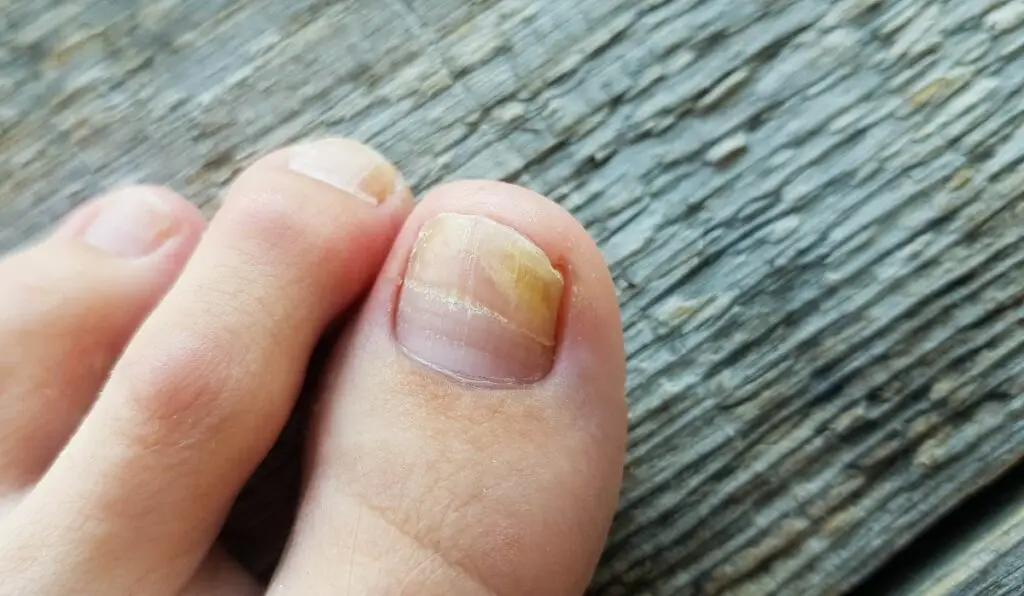
How to recognize yellowing nails: the first signs
Yellowing of the toenails usually develops gradually, so it is easy to miss in the early stages. Firstly, the color of the nail plate changes. It can turn light yellow, yellow-gray, or even brownish. The nails lose their natural shine, become dull, and their surface becomes less smooth. In addition, the nail plate may thicken, become brittle, and its growth may slow down.
In addition to visual changes, yellowing of the nails may be accompanied by additional symptoms. These include:
- deformation of the nail plate, uneven edges;
- the appearance of an unpleasant odor;
- itching, redness, or irritation of the skin around the nail;
- discomfort or pressure in the nail area.
It is important to understand that yellowing of the toenails is not always a cause for concern. Temporary discoloration may occur after using bright or dark nail polish, due to mechanical trauma, or as a result of age-related changes that cause the nail plate to become denser and less transparent.
However, if the yellowing of the nails does not disappear over time, worsens, or is accompanied by unpleasant symptoms, it is worth consulting a doctor or podiatrist. Such signs may indicate fungal infections or other diseases that require professional diagnosis and treatment.
Why toenails turn yellow: main causes
Yellowing of toenails can be caused by external or internal factors.
External factors
The most common external factors that cause yellowing of toenails include:
- Use of bright and dark nail polishes. These coatings contain a large amount of pigments that can penetrate the structure of the nail plate. As a result, yellowing appears evenly or in the form of spots and gradually disappears as the nail grows back.
- Aggressive removal of the coating. Incorrect use of a milling cutter, use of overly harsh files or aggressive removers lead to thinning and damage to the plate. In response, the nail may change its structure and take on a yellowish or dull tint.
- Tight shoes and contact with synthetic materials. Constant pressure, friction, wearing synthetic socks, and increased sweating create an unfavorable environment. Under such conditions, the nail plate can thicken, lose transparency, and change color.
- Nail injuries. Blows, prolonged mechanical pressure, or intense physical activity can damage the nail bed. After an injury, the nail plate sometimes takes on a yellow, grayish, or brownish tint and may partially detach.
- Contact with chemicals and dyes. Some household products, pigmented creams, self-tanning products, and dyes in shoes or socks can leave marks on your nails, causing them to change color.
Internal factors
If yellowing of the toenails persists for a long time, progresses, and is accompanied by other symptoms, it is most likely caused by internal factors. The main ones include:
- Fungal nail infections (onychomycosis). In the early stages, the infection may manifest itself as yellowing of the nail plate, which over time is accompanied by thickening, brittleness, and deformation of the nail.
- Chronic diseases and metabolic disorders. Diabetes mellitus, poor circulation in the lower extremities, liver or kidney disease, and hormonal disorders can affect the nutrition of the nail plate, causing it to change color and structure.
- Deficiency of vitamins and minerals. Lack of iron, zinc, B vitamins, and other nutrients impairs nail plate regeneration, which can lead to dullness and yellowing.
- Taking certain medications. Some drugs, such as antibiotics, affect metabolic processes or tissue pigmentation, which can also affect the condition of the nails.
Yellow nail syndrome should be highlighted separately. This is a rare condition in which the nail plate acquires a persistent yellow tint, thickens, and practically stops growing. It is often caused by problems with the respiratory system (chronic bronchitis, pleural effusion), the lymphatic system (lymphedema), and other conditions such as rheumatoid arthritis or cancer.
How to restore healthy color and structure to your nails
Restoring healthy color and structure to toenails always begins with determining the cause of their yellowing. There is no universal solution, as the approach to care and treatment will vary depending on what caused the problem.
If the yellowing of the nail plate on the feet is due to external factors, the main focus should be on its restoration. In such cases, you should temporarily refrain from using decorative coatings so that the nails can fully recover. Additionally, it is important to take care of them. The nail plate and cuticle should be regularly moisturized with special oils and serums. You should also choose comfortable shoes made of natural materials that do not create excessive pressure or disrupt microcirculation.
In cases where internal factors are the cause of yellow toenails, you should first consult a doctor. A specialist will help determine whether the problem is related to a fungal infection, hormonal disorders, vitamin deficiency, or other diseases. After making a diagnosis, they will prescribe the appropriate treatment. This may include antifungal therapy, dietary adjustments, vitamin supplements, or treatment of the underlying disease. Only by eliminating the internal factor can you achieve stable results and prevent the nails from changing color again in the future.
Prevention: how to prevent yellowing of the nails
Preventing yellowing of toenails is much easier than restoring their color and structure later. In most cases, it is enough to review your daily habits and care routine:
- Do not overuse decorative coatings. Gel polish should not be worn on toenails for longer than 2–3 weeks. During the cold season, it is better to avoid this type of coating altogether, replacing it with regular nail polish or another alternative.
- Choose comfortable shoes and natural socks. Tight shoes create constant pressure and friction, while synthetic socks increase sweating. As a result, nails become injured and conditions conducive to the development of fungal infections are created.
- Take care of your nails regularly at home. Moisturize the nail plate and cuticles with special oils or creams, periodically do foot baths and apply special masks. It is also important to monitor the length of your nails and file them in a timely manner.
And most importantly, if you get a pedicure at a salon, it is important that it is performed by professionals. A qualified specialist correctly assesses the condition of the nails, adheres to safe pedicure techniques, works with sterile instruments, and uses high-quality materials. These are the principles followed by the nail service specialists at the Seizó salon. We care not only about the aesthetic appearance of your nails, but also about your health and safety.