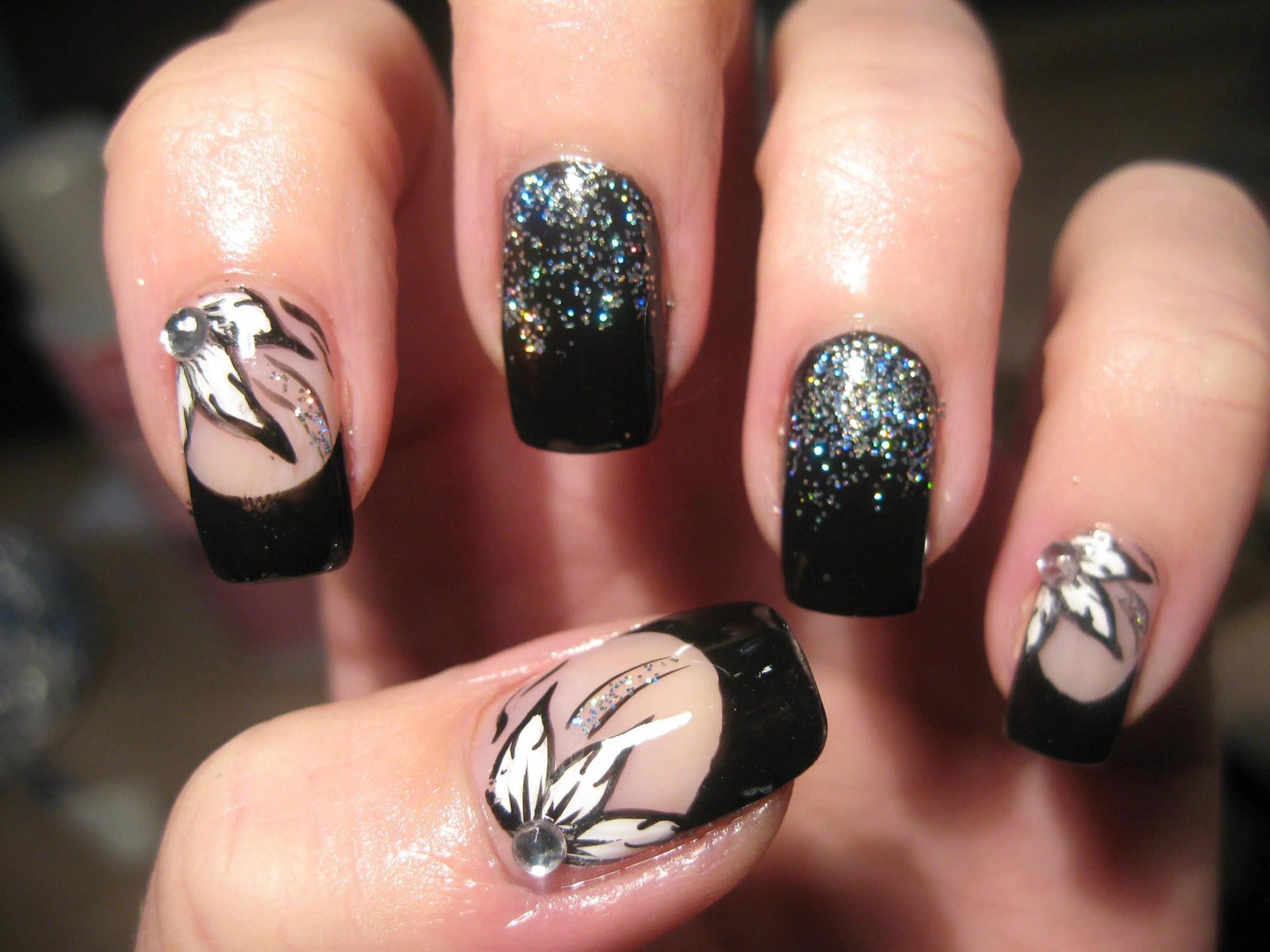
Gel polish has long replaced regular polish thanks to its incredible durability and luxurious shine, which women love so much. Manicures with this type of polish last an average of 14–21 days and remain flawless. So the dream of perfect nails has become a reality for millions of girls and women.
We are used to getting gel polish manicures in salons in Kyiv, but what can you do when you can't get an appointment with a manicurist and your manicure needs to be refreshed? In this case, you can apply gel polish to your nails at home. Today, specialized stores offer all the necessary materials and tools, so anyone can perform this procedure. The main thing is to know the correct technique. So, in this article, we want to tell you how to apply gel polish step by step.
What is gel polish and its advantages
Gel polish is a modern type of nail coating that combines the properties of classic polish and structural gel. Essentially, it is a polymer coating that is applied to the nail plate in thin layers and hardens not in the air, but under the action of an ultraviolet (UV) or light-emitting diode (LED) lamp.
Gel polish manicures have many advantages:
- Durability and resistance. The coating can last on nails for 2–4 weeks without chipping, cracking, or losing its shine.
- Color saturation. Gel polish has a dense texture, thanks to which the pigment lays evenly and brightly from the very first coat.
- Fast drying. Unlike traditional nail polish, which takes up to two hours to dry completely, gel polish polymerizes in a lamp in just 30–60 seconds per coat.
- Suitable for complex designs. Gel polish makes it easy to create gradients, complex patterns, and three-dimensional designs.
- Protection of the nail plate. Proper application of the coating acts as a protective shell that reduces brittleness and protects nails from external damage.
What you need for a home gel polish manicure
How to do a gel polish manicure at home? You simply cannot do without a basic set of tools and materials. The list includes:
- Nail files of different grit sizes. For home manicures, it is advisable to have several types of nail files. Coarse files (up to 150 grit) are needed to remove old polish, while fine-grained files (180–220 grit) are suitable for shaping nails. The more varied the set, the easier it is to properly prepare your nails for gel polish application.
- Tools for hygienic manicure. Before applying the coating, you need to tidy up your nails. To do this, you will need a pusher or orange stick, as well as scissors or cuticle nippers.
- Manicure device with attachments. This item is not essential, but it greatly simplifies the process of removing the coating and performing a manicure. Any high-quality device with a basic set of cutters is suitable for home use. The most important attachments are cylindrical (for removing old gel polish), thin (for cuticle treatment), and cone-shaped (for grinding and polishing).
- Buff. It mattifies the nail, removes natural shine, and creates «hooks» that help the base coat adhere better to the nail plate.
- Degreaser. Removes dust, grease, and residue from nails. Without it, the coating may not adhere evenly and peel off more quickly.
- Dehydrator. Dries the nail plate and improves the adhesion of the base coat to the nail. An essential product for long-lasting manicures.
- Primer. Works as a primer. Provides additional fixation of the base and prevents it from peeling off.
- Base coat for gel polish. Creates an even and durable base, smoothes the nail and protects it from the pigment in decorative coatings.
- Gel polish. You can use both classic colors and gel polishes with decorative effects. The choice depends on your taste.
- Top coat. A finishing coat that sets the color, adds the desired effect (gloss or matte), and protects the gel polish from chips and scratches.
- UV or LED lamp. Required for gel polymerization. LED lamps dry faster, but both options are great for home use.
This is a basic starter kit, without which it is difficult to do a high-quality gel polish manicure.
Preparing nails for coating
The durability, smoothness, and neat appearance of the coating will depend on how correctly and carefully you prepare the nail plate for applying gel polish. The process consists of two main parts, namely performing a manicure and treating the nails before applying the base coat.
It all starts with a hygienic manicure. First, you need to completely remove the old coating from your nails. If it was regular nail polish, just use nail polish remover and a cotton pad. If there is gel polish left on your nails, you need to remove it with a drill or a medium-hardness nail file. During this process, it is important to work at a safe angle so as not to damage the nail plate.
After that, you need to shape your nails. This can be done with a nail file or a nail drill. It is important that all nails are the same length and have an even free edge. Next, you need to work on the cuticles. They can be removed using the classic cutting method. To do this, first carefully push back the cuticle with a cuticle pusher, and then cut it off with manicure scissors. You can also use a milling machine with special attachments to remove it. The main thing is to work carefully so as not to injure the skin and the nail plate growth area.
Once the shape and cuticle have been tidied up, the nail plate needs to be lightly buffed. This can be done with a buff or a special machine attachment. The surface of the plate should become matte, as this improves its adhesion to the base, preventing the coating from peeling off.
The next step is to prepare the nails for applying gel polish. Firstly, the nail plate must be thoroughly cleaned of dust with a lint-free wipe. Next, a degreaser is applied to remove any remaining moisture and grease. After that, a dehydrator is used if necessary. The final step is to apply a primer. After that, you can proceed to the step-by-step gel polish manicure.
How to apply gel polish correctly: step-by-step instructions
Once your nails are fully prepared, you can move on to the most important stage. According to the gel polish application technique, it starts with covering the nail plate with a base coat. It has two main functions:
- creates a strong molecular layer between the nail and gel polish;
- prevents pigments contained in the colored coating from penetrating the keratin layer of the plate.
A regular base coat is applied in a thin layer, just to create adhesion. A rubber base coat, on the other hand, can be applied in a thicker layer. It can be used to smooth out the nail plate and give the coating a flawless glossy shine.
After application, the base must be cured in a lamp. This takes about 2 minutes in a UV lamp and 30–60 seconds in an LED lamp. After drying, the coating remains sticky, which is normal. It is very important not to touch the dried base with your fingers, as grease and dust can reduce the durability of the manicure.
Next, you can move on to gradually applying gel polish. It is best to cover your nails with two or three thin layers. If the product is highly pigmented, one layer may be enough. It is very important to apply the gel polish thinly. An overly thick layer may not dry inside, causing wrinkles or unevenness on its surface. Each applied layer must be dried in a lamp.
The next step is applying the top coat. It sets the color, protects it from scratches and chips, and creates the desired effect (glossy or matte). After polymerization, use a special tool to remove the sticky layer (if any) from the top coat. If you are using a top coat without a sticky layer, this step is not necessary.
Aftercare and coating durability
How you care for your hands after applying gel polish determines the durability of the coating and the neatness of your manicure. That is why you should get into the habit of regularly using cuticle oil. It softens the skin around the nail, reduces the risk of hangnails, and has a positive effect on the condition of the nail plate. In addition, moisturized cuticles are easier to remove during your next manicure, minimizing cuts and irritation.
When choosing oil, pay attention to its composition:
- Mineral oils create a film on the skin's surface that retains moisture inside. However, with frequent use, they can have the opposite effect and dry out the cuticle. Therefore, it is better to use such products no more than once every 15–20 days.
- Natural plant oils (almond, apricot, coconut, jojoba) are suitable for daily use. They deeply moisturize the skin, prevent cracks, soften the cuticle, and promote healthy nail growth. These are the products most recommended by professionals.
To make your gel polish manicure last as long as possible, it is advisable to avoid prolonged contact of your nails with hot water and household chemicals. Therefore, it is better to use gloves when cleaning or washing dishes. Also, do not use your nails as tools, because if the coating is subjected to mechanical stress, it can be damaged.
That's probably all you need to know about how to apply gel polish at home. This procedure is not complicated at all. All you need is a little patience, practice, high-quality materials, and adherence to the technique.