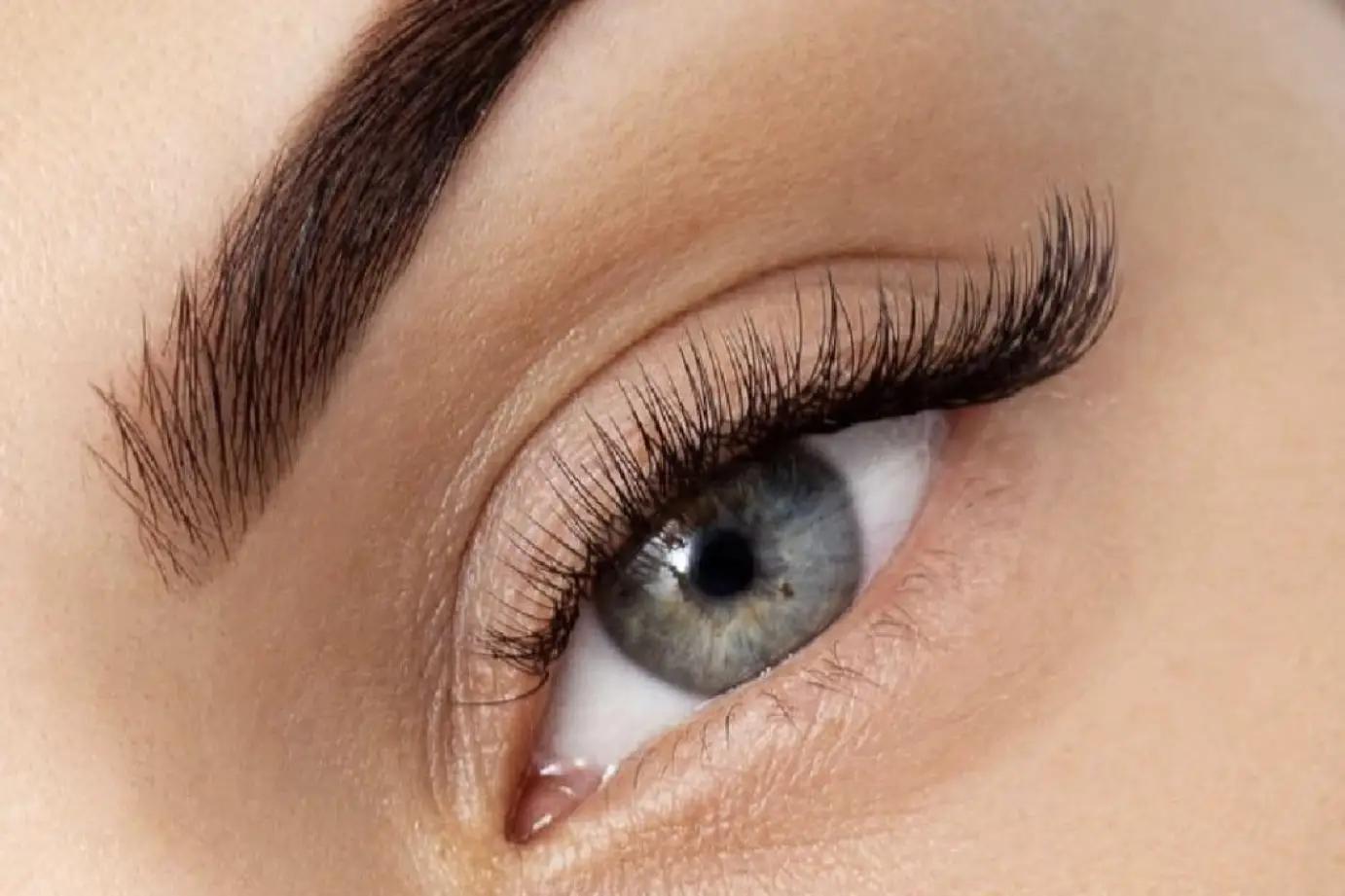
What is eyelash extension?
Eyelash extensions are a cosmetic procedure in which artificial hairs are attached to natural eyelashes to add length, thickness, and the desired shape. Lightweight, hypoallergenic synthetic or natural fibers that mimic natural eyelashes are used in the procedure.
The extension procedure has a number of advantages:
- eliminates the need for daily mascara use;
- helps to correct the natural characteristics of eyelashes;
- visually emphasizes the shape of the eyes and makes the gaze more expressive;
- allows you to achieve the most natural or, conversely, the most striking effect (depending on the client's wishes).
Therefore, eyelash extensions are a quick and effective way to emphasize the beauty of your eyes and save time on daily makeup.
Stages of the extension procedure
Eyelash extensions consist of several basic steps, each of which affects the final result.
Selection of artificial eyelashes
Before extending eyelashes, the lash maker discusses with the client the length, thickness, and curl of the hairs, as well as the type of volume. This determines the type and technique of the subsequent extension.
Cleansing and degreasing eyelashes
At this stage, natural eyelashes are cleaned of cosmetics and sebum. To do this, the technician uses professional products. This is one of the most important stages, as it determines the reliability of the adhesive bond with the hair and, therefore, the duration of wear of the extended eyelashes.
Preparation and isolation of lower eyelashes
After cleansing, the technician applies silicone patches or gel pads to cover the lower lashes. This is necessary to prevent the upper and lower lashes from sticking together during the extension process and to prevent glue from getting on the skin.
Direct growth
Next, the lash maker glues artificial eyelashes to natural ones. Depending on the extension technique and the selected volume, these can be single hairs or bundles. During the procedure, special professional glue and two types of tweezers (straight for isolation and curved for working with eyelashes) are used. Usually, the extension starts from the outer corner of the eye. The technician maintains an equal distance between the eyelashes and the correct angle of inclination so that everything looks neat and symmetrical.
Combing
After completing the extension, the technician combs through the lashes, straightens each cluster, and checks the evenness and direction of the hairs. This helps to ensure that the lashes do not cross, stick together, and are the correct shape.
How long does it take to extend eyelashes? The procedure usually takes 2 to 4 hours. It all depends on the technique used and the complexity of the work.
What are the types of extensions and volumes?
Modern techniques and types of eyelash extensions allow you to create various effects, ranging from the most natural to ultra-voluminous. Below we will look at the most popular options.
Classic
Classic eyelash extensions are the most delicate option. The technician glues one artificial eyelash to each natural eyelash. This makes the eyes look more open and expressive, while still looking as natural as possible. This volume is ideal for those who appreciate natural beauty.
Volumetric extension 2D-3D
In this case, two (2D) or three (3D) artificial hairs formed into bundles are attached to one natural eyelash. This creates an effect of thickness and depth. This volume is well suited for those who want a more pronounced result while maintaining a natural look.
4D-6D extensions and mega volume
This type of extension involves the use of bundles of 4–6 individual lashes (4D–6D). This allows you to achieve the most expressive look possible. This option is suitable for stage makeup, parties, and photo shoots.
Eyelash extension technique
The extension technique determines how the technician attaches artificial hairs to natural eyelashes. There are three main methods used in the lash industry: single hair extensions, cluster extensions, and a combined (hybrid) technique.
Single hairs are a classic technique. The technician glues one artificial eyelash to one natural eyelash, preserving the natural direction of growth. The result is a neat yet expressive look.
The cluster extension technique involves gluing a ready-made or hand-formed cluster of 2–5 individual lashes to one natural lash. Clusters can vary in thickness, length, and curl, depending on the desired volume and effect.
Hybrid (combined) technique combines the extension of single eyelashes and bundles of different volumes. The master alternates them in the right areas, creating the perfect balance between naturalness and density. This is a universal option that suits most clients and always looks harmonious.
How to choose the right eyelash extension effect for your eye shape
Every eye shape is unique, and the right eyelash extension effect can make your eyes look more open, expressive, and harmonious. Below, we will look at the most popular options and tell you who they are suitable for.
Natural effect
The natural effect is the choice of those who just want to emphasize the beauty of their eyes. In this case, artificial hairs are selected to be as similar as possible to natural ones in color, length, and curl. The advantage of this effect is that the eyelashes look completely natural and cannot be distinguished from natural ones. It suits all women, regardless of eye shape.
Fox-like gaze
The fox effect is one of the most popular and expressive types of eyelash extensions. It involves gradually increasing the length of the hairs toward the outer corner of the eye. This visually elongates the eyes and creates the impression that eyeliner has been applied to the upper eyelids. This type of extension adds mystery and allure. It is suitable for girls with large eyes and those with drooping outer corners.
Puppet effect
The doll effect creates the most open look possible. To achieve this, the technician places longer and more intensely curled lashes in the center, while closer to the corners they become shorter. This visually rounds the eye and makes it appear larger. This type of extension looks very expressive and bright. It is suitable for owners of narrow, almond-shaped eyes.
«Wet» effect
The «wet» effect has been trending in recent years. It creates the illusion of a light, moist shine on the lashes, as if they were wet with water. To achieve this, thin, unopened bundles with closed tips are used. The eyelashes appear thicker and darker, but still look natural, and the eyes take on a mysterious depth. This effect is suitable for anyone who likes modern and unusual solutions.
What materials are needed for the procedure
To extend eyelashes, you first need artificial hairs. Depending on the material, they are divided into several main types:
- Natural — look as natural as possible, but are quite expensive.
- Mink — fur is very soft, light, and creates a voluminous effect.
- Silk fabrics are elastic, lightweight, and have a glossy texture.
- Synthetic — the most affordable option with a wide selection of lengths, thicknesses, and curves.
When choosing artificial eyelashes, it is important to consider their size. They are divided into the following categories based on length:
- Short (8–10 mm) — for the most natural look;
- Medium (10–12 mm) — a universal option for most types of extensions;
- Long (12–15 mm and above) — for a bright, striking, and expressive look.
In terms of thickness, artificial eyelashes can be thin (0.03–0.07 mm), medium (0.10–0.15 mm), and voluminous (0.18–0.25 mm). The choice of thickness depends on the result you want to achieve.
In addition to the hairs themselves, high-quality glue is needed for extension. It is responsible for the strength of the connection between natural and artificial eyelashes, and therefore for how long they last. This can be:
- Hypoallergenic glue — suitable for customers with sensitive skin, as it contains a minimum of aggressive components;
- Quick-drying adhesive — provides instant adhesion, allowing the craftsman to work quickly.
Additionally, auxiliary materials and tools are used during eyelash extension. Their list includes:
- primers and degreases;
- adhesive removers;
- silicone patches;
- combs;
- tweezers (straight and curved);
- lint-free wipes;
- products for cleaning and conditioning eyelashes.
Properly selected materials for eyelash extensions allow you to create a result that will emphasize the natural beauty of the eyes and make the look truly expressive.
Contraindications to eyelash extensions
Eyelash extensions are a safe procedure, but they are not suitable for everyone. There are a number of conditions and diseases for which it is better to refrain from undergoing this procedure. These include:
- psoriasis in the eyelid area;
- demodicosis;
- conjunctivitis and other inflammatory eye diseases;
- excessive eyelash loss;
- asthma and frequent allergic reactions;
- viral or cold-related illnesses;
- confirmed allergy to extension materials.
In case of absolute contraindications (e.g., allergies or active psoriasis), eyelash extensions should be replaced with a more delicate procedure—lamination. It does not provide such pronounced volume, but it makes natural eyelashes longer, darker, and curled.
Possible complications after the procedure
If the eyelash extension procedure is performed poorly or the materials are chosen incorrectly, undesirable consequences may arise:
- tingling in the eyelid when blinking;
- feeling of heaviness and discomfort;
- swelling, redness, itching;
- sudden redness of the eyes.
In such cases, the eyelashes must be removed immediately, and a doctor must be consulted.
To minimize the risk of unwanted complications, do not perform the procedure yourself. It is better to go to a beauty salon and sign up for eyebrow and eyelash care services with an experienced professional. A professional will select the right materials, take your individual characteristics into account, and perform the procedure with high quality.
How long do eyelash extensions last?
How long eyelash extensions last depends on many factors. The main factors influencing this are:
- Type of adhesive. High-quality adhesives ensure long-lasting adhesion of artificial eyelashes to natural ones (usually up to 4–6 weeks).
- Extension method. Classic extensions last less than volumetric ones due to greater contact with natural eyelashes.
- Growth of natural eyelashes. Each natural eyelash has its own life cycle and sooner or later it falls out, and with it the extension. If your eyelashes grow faster, you will need a correction sooner.
The duration of wearing eyelash extensions varies from 4 to 6 weeks. It is also worth noting that eyelash extensions require mandatory correction. The first correction, if necessary, should be carried out in the second week after the procedure.