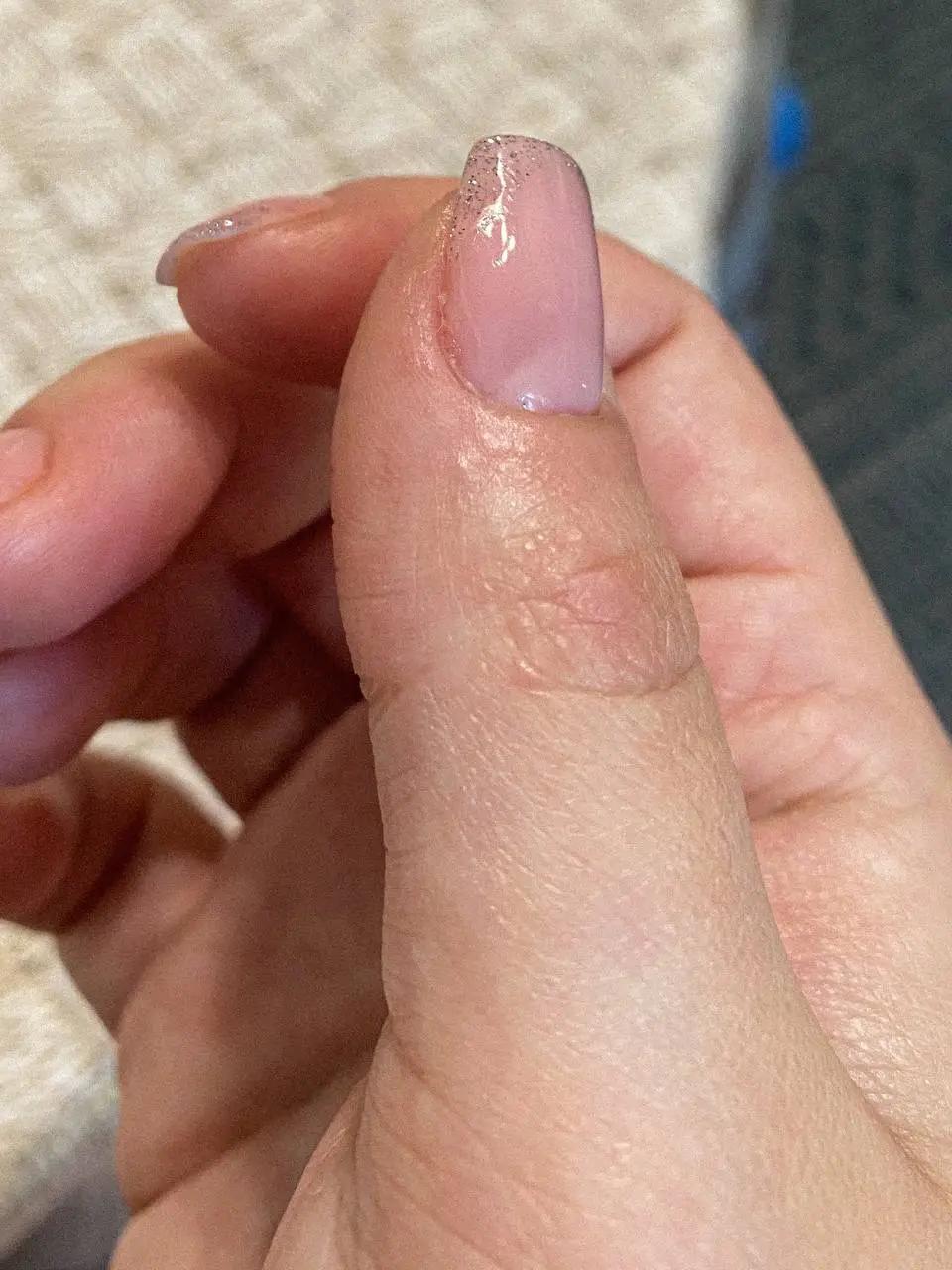
How does an allergy to gel polish manifest itself: main symptoms
Allergies to gel polish can manifest themselves in different ways, depending on the sensitivity of the body and the method of contact with the allergen. Most often, the reaction occurs in two forms — contact and respiratory — and each has its own characteristic symptoms.
Contact allergy is the most common type of reaction that occurs as a result of direct skin contact with components of gel polish, base coat, top coat, or nail preparation products. Symptoms usually appear in the cuticle area, around the nails, or on the fingers. The main manifestations of contact allergy include:
- itching and burning in the cuticle and finger areas;
- redness and swelling of the skin;
- dryness, flaking, feeling of tightness;
- the appearance of small rashes or blisters;
- cracks, irritation, skin soreness;
- detachment of the plate from the nail bed (in complex cases).
Symptoms may appear immediately after a manicure, several hours or even days later, which often makes it difficult to determine the cause of the reaction.
Respiratory allergies occur due to inhalation of vapors or dust formed when working with gel polish, bases, tops, removers, or when filing the coating. This reaction is more common in nail technicians, but can also occur in clients with increased sensitivity. The main symptoms of respiratory allergies are:
- itching in the nose or throat;
- sneezing, nasal congestion;
- watery eyes, redness of the eyes;
- cough or irritation of the respiratory tract;
- difficulty breathing or shortness of breath (in rare cases).
Both forms of allergy require attention, as ignoring symptoms can lead to a worsening of the reaction and chronic skin or respiratory problems.
Why allergies to gel polish occur: common causes of reactions
Allergies to gel polish do not occur without reason. But why do your fingers itch after a manicure? In most cases, this reaction is associated with:
- The composition of gel polish and related materials. Bases, tops, and colored coatings contain acrylates, methacrylates, and other active chemical components. These substances are most often allergens, especially with regular or prolonged contact with the skin.
- Violation of the coating application technique. Getting the base, gel polish, or top coat on the cuticle and side ridges, insufficient polymerization of the coating in the lamp, or applying too thick layers increases the risk of irritation and allergic reactions. Under-polymerized material is particularly aggressive to the skin and nails.
- Using low-quality or expired materials. Cheap gel polishes, bases, and tops contain a higher concentration of aggressive components or do not undergo proper quality control. This significantly increases the risk of allergies.
- Individual predisposition. People with sensitive skin, atopic dermatitis, other types of allergies, or weakened immune systems are more likely to experience negative reactions to gel polish.
It is important to understand that the absence of allergies today does not mean that they cannot appear over time. The body's reaction to gel polish is often cumulative and can manifest itself after months or even years of regular use. With constant contact with a potential allergen, the immune system may at some point begin to react to it, even if no symptoms have previously occurred. That is why itching, redness, or irritation sometimes appear suddenly, without obvious reasons, and it can be difficult to immediately associate them with a manicure.
What to do if your cuticles or fingers itch after a manicure
If your cuticles itch after a manicure, or you experience other symptoms of an allergy to gel polish, this is a sign that should not be ignored. Even if the symptoms are minor, it is important to take all necessary measures in a timely manner to prevent the allergic reaction from progressing. Firstly, you should stop contact with the potential allergen. If symptoms appear shortly after a manicure, it is advisable to remove the gel polish as soon as possible. You should also refrain from reapplying any decorative products until the symptoms have completely disappeared.
The skin around the nails needs to be soothed. To do this, wash your hands with cool water without soap or using a mild cleanser. In the first few days, do not use oils, creams with active ingredients, or alcohol-based products to avoid aggravating the irritation.
Next, you should consult a doctor. This could be a dermatologist or allergist. The specialist will assess the condition of your skin, determine the nature of the reaction, and prescribe treatment if necessary. Treatment usually involves the use of anti-inflammatory or antihistamine ointments, as well as antihistamine tablets. Self-medication is not recommended in such situations, as incorrectly selected remedies can worsen the condition of the skin or obscure the clinical picture.
It is very important to understand that if you have developed an allergy to gel polish, in most cases it will remain with you forever. In approximately 95% of cases, this reaction is chronic and will recur with every contact with gel polish or similar products. In this situation, it is worth finding a safe alternative. This could be DIP systems, which do not require polymerization in a lamp, classic manicures with regular nail polish, or Japanese manicures, which are aimed at caring for and restoring the natural nail plate.
How to minimize the risk of allergies after a manicure
It is impossible to completely eliminate the risk of developing an allergy after a manicure, but it can be significantly reduced by following certain recommendations:
- Choose a manicurist who works with certified, high-quality materials from well-known brands and adheres to professional standards.
- If you have sensitive skin, ask your technician in advance to use hypoallergenic bases, gel polishes, and top coats with minimal potential allergens.
- During the procedure, protect the skin around your nails with cream or a special gel to reduce direct contact between the materials and your skin. Additionally, ask the technician to apply the gel polish away from the cuticles and side ridges.
- Follow the technique and sequence of applying each coat of polish. It is important that all stages of the manicure are performed in accordance with the technology.
- Ensure that the technician uses a lamp that is in good working order and has a power rating that is appropriate for the materials selected.
And, of course, after your manicure, don't forget about nail care. Be sure to moisturize your hands with cream or a soothing agent. This helps maintain their protective barrier and reduce sensitivity.